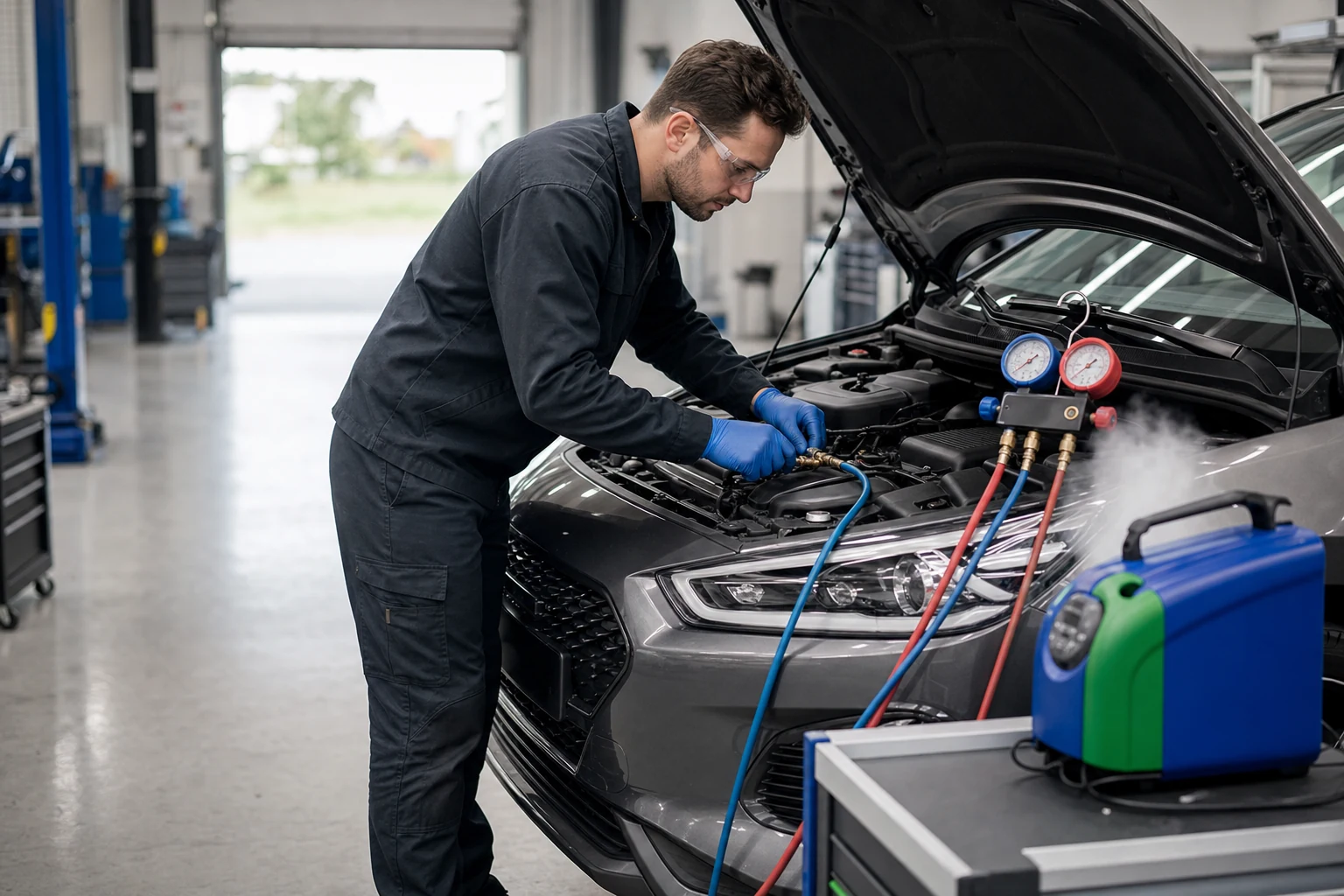


If your car air con has stopped blowing cold air, low refrigerant pressure is one of the first things many drivers think about. It is a common clue, but it is not a full diagnosis on its own.
Pressure checks matter because they help show whether the system simply needs the right recharge process, or whether another fault is stopping it from cooling properly. Understanding what the readings mean can save guesswork and help restore reliable comfort.
What refrigerant pressure does in your air con system
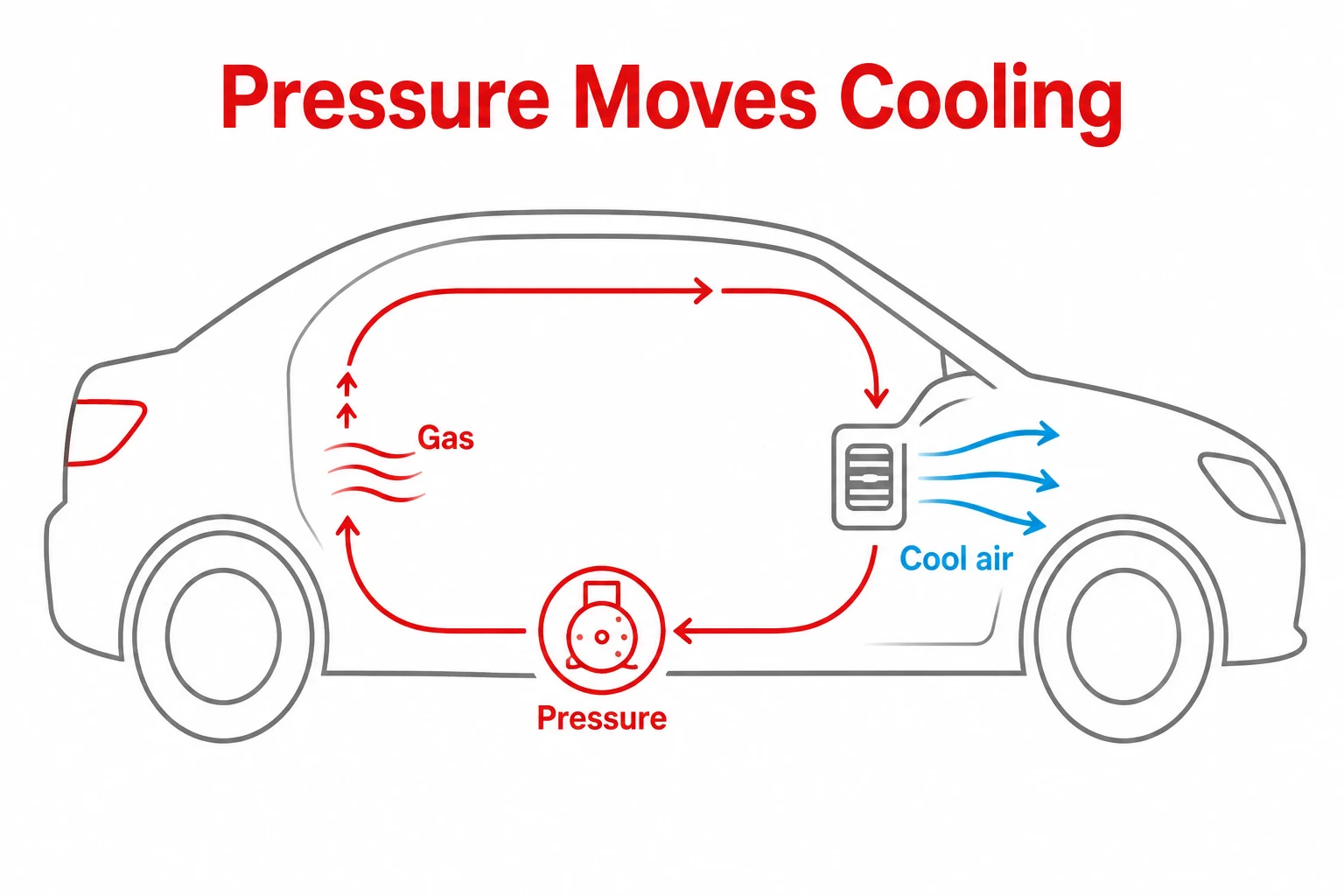
Your car air conditioning system relies on refrigerant moving around a sealed circuit. As it travels through the system, it changes pressure and temperature so heat can be carried away from the cabin. The compressor, condenser, expansion device and evaporator all depend on the correct refrigerant charge to work as intended.
When the refrigerant level is right, the system can build and control pressure properly. This allows the evaporator to become cold enough to chill the air passing through the vents, while the rest of the system manages heat safely and efficiently.
Low pressure usually means there is not enough refrigerant in the circuit, although other issues can sometimes create similar symptoms. That is why pressure readings are only part of the picture. A technician will look at the low side and high side readings, the temperature at the vents, compressor operation and the general behaviour of the system.
Drivers often search for air con recharge near me when cooling drops off, and in many cases a recharge is part of the answer. The important point is that the recharge should follow proper checks, not replace them. BonAir explains its process for car air conditioning system recharging in more detail for drivers who want to understand what is involved.
Common signs of low refrigerant pressure
Low refrigerant pressure often shows up as weak or inconsistent cooling. You may notice the air from the vents feels cool at first, then becomes warmer during the journey. In other cases, the system may blow only mildly cool air even when set to its coldest setting.
Another common sign is the compressor clutch failing to engage, or cycling on and off more than expected. Many vehicles are designed to protect the compressor if pressure falls too low. This is useful because the compressor needs refrigerant and oil movement through the system for protection, but it can leave the driver wondering why the air con appears to do nothing.
Other clues can include misty windows taking longer to clear, an air con system that struggles in warm weather, or cooling that feels noticeably weaker than it did after a previous service. Some drivers also hear unusual clicks as the system attempts to operate but cannot maintain stable pressure.
These symptoms do not prove low refrigerant by themselves. A blocked condenser, electrical fault, failed pressure sensor, compressor issue or poor airflow can also affect cooling. That is why a pressure check gives useful direction before anyone adds refrigerant. It helps separate a likely low charge from a fault that needs repair work first.
Why low pressure should not be ignored
It is tempting to see low refrigerant pressure as a minor comfort issue, especially if the air con still works a little. In reality, the pressure reading can be an early warning that the system is not operating within its normal range.
Air conditioning refrigerant does not get used up like fuel. Over time, small losses can happen through seals, joints and service ports, but a noticeable drop in performance may suggest the system needs checking. If the pressure is very low, adding more refrigerant without understanding why can lead to short lived results.
The compressor is one of the most important components in the system. If refrigerant pressure is too low, oil circulation may be affected and the compressor may not receive the protection it needs. Modern vehicles often use pressure switches or sensors to prevent operation when readings are outside an acceptable range, but the underlying cause still needs attention.
Low pressure can also reduce demisting performance. Many drivers think of air con only as a summer comfort feature, but it also helps remove moisture from cabin air. When the system is weak, windows may clear more slowly and the cabin can feel less comfortable in damp conditions.
If you are unsure whether your system is due for attention, BonAir has a helpful guide on how often car air conditioning may need recharging. The right timing depends on the vehicle, its condition and how the system is performing.
How technicians check pressure before recharging

A proper air con check is more than connecting equipment and adding refrigerant. The technician should first assess the system condition, confirm the vehicle refrigerant type and look for obvious signs that a recharge alone would not be sensible.
Pressure gauges help show what is happening on each side of the system. The low pressure side and high pressure side should behave in a way that matches the vehicle and the conditions at the time. Readings can vary with outside temperature, engine speed, cabin fan setting and whether the compressor is running, so experience matters when interpreting them.
If the pressure is very low, the system may need leak checking before a recharge is completed. Depending on the equipment and process used, this can include recovery of remaining refrigerant, vacuum testing, weighing the correct refrigerant amount back into the system and checking performance afterwards.
The correct refrigerant charge is important. Too little can leave the system weak, while too much can create poor cooling and unnecessary strain. This is why professional automotive air conditioning work uses measured equipment rather than guesswork.
Drivers who want a wider overview of the process may find BonAir’s guide to car air con regassing useful, especially if they are comparing recharging, servicing and fault diagnosis.
When a recharge helps and when repairs come first
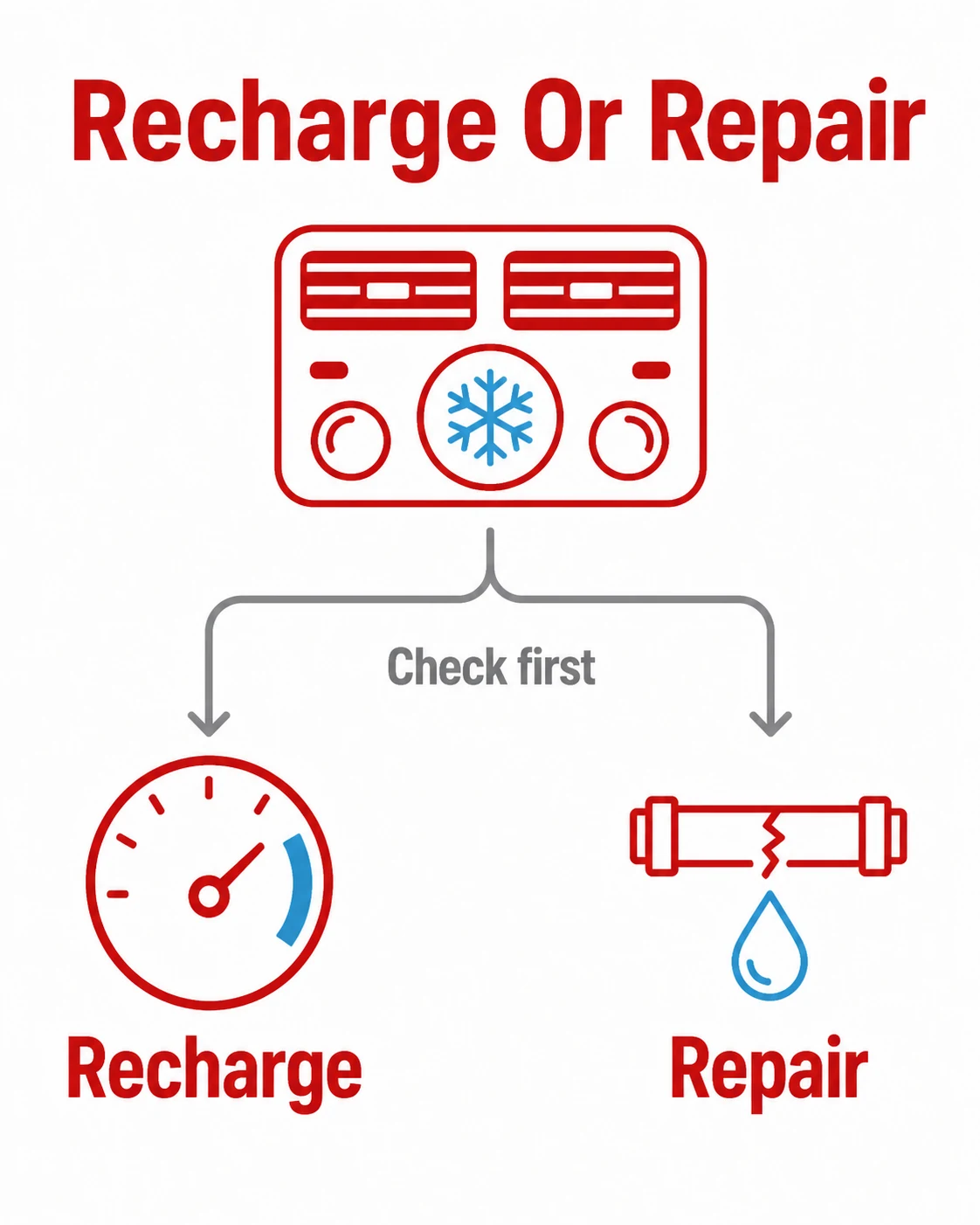
A recharge can help when the system is low on refrigerant but otherwise sound. Once the correct amount of refrigerant is restored, the air con can often return to strong, steady cooling. The improvement can be noticeable at the vents, especially if the system had been gradually weakening over time.
Repairs may come first if the system will not hold pressure, if a leak is found, or if key components are not operating. In those cases, recharging without repair may only mask the problem for a short time. A good service approach is to identify what the system is doing, then choose the work that matches the fault.
Common repair related findings can include damaged seals, failed valves, condenser leaks, pressure sensor faults, compressor control problems or airflow issues. Some vehicles may also have control panel or wiring faults that prevent the air con from being requested correctly.
It is also worth remembering that poor cabin freshness is a separate issue from refrigerant pressure. If the air con cools but smells unpleasant, an antibacterial clean may be more relevant than a recharge. If it does not cool and smells musty, both cooling performance and hygiene may need attention.
For drivers weighing up whether they need diagnosis or repair support, BonAir’s article on professional air conditioning repairs explains why proper testing is valuable before parts are replaced or refrigerant is added.
How to explain the problem when booking help
You do not need to know the exact pressure reading before asking for help. What matters is describing the symptoms clearly. Tell the technician whether the air con is not cooling at all, cooling only sometimes, making unusual noises, or switching off quickly after being turned on.
It also helps to mention when the system last worked well, whether it has been recharged before and whether the cooling failed suddenly or gradually. A sudden loss can point towards a different type of issue than slow decline over months.
If you have already had a pressure reading taken, share it, but avoid treating it as the whole answer. Pressure needs context. The same number can mean different things depending on whether the engine was running, whether the compressor was engaged and what the surrounding conditions were like.
When searching for air con recharge near me, look for a service that treats recharging as part of a measured process. The goal is not just to add refrigerant, but to restore cooling performance in a way that makes sense for the condition of the vehicle.
- Low refrigerant pressure often points to a low charge, but it is not a complete diagnosis by itself.
- Pressure checks help confirm whether a recharge is suitable or whether a leak, sensor fault or component issue needs attention first.
- A correct recharge uses the right refrigerant type and measured quantity for the vehicle.
- Ignoring low pressure can affect cooling, demisting and compressor protection.
- Clear symptoms help a technician choose the right checks quickly.
Frequently asked questions
Does low refrigerant pressure always mean I need a recharge?
Not always. It often means the system is low on refrigerant, but the cause matters. A technician should check whether the system can hold pressure and whether the compressor and controls are working before completing a recharge.
Can I keep using the air con if the pressure is low?
If the system is not cooling properly, it is best to have it checked. Many vehicles will limit compressor operation when pressure is too low, but the cause still needs diagnosis to protect performance and reliability.
Why did my air con lose pressure after being recharged?
If pressure drops again after a recharge, there may be a leak or another fault in the system. Refrigerant should remain in a sealed circuit, so repeated loss needs investigation rather than repeated topping up.
Is low pressure the same as needing antibacterial treatment?
No. Low pressure affects cooling performance. Antibacterial treatment is aimed at odours and hygiene inside the ventilation system. Some cars may benefit from both, but they solve different problems.
Get your cooling checked properly
If your car air con is weak, warm or inconsistent, BonAir can check the system and advise whether recharging or repair is the right next step.