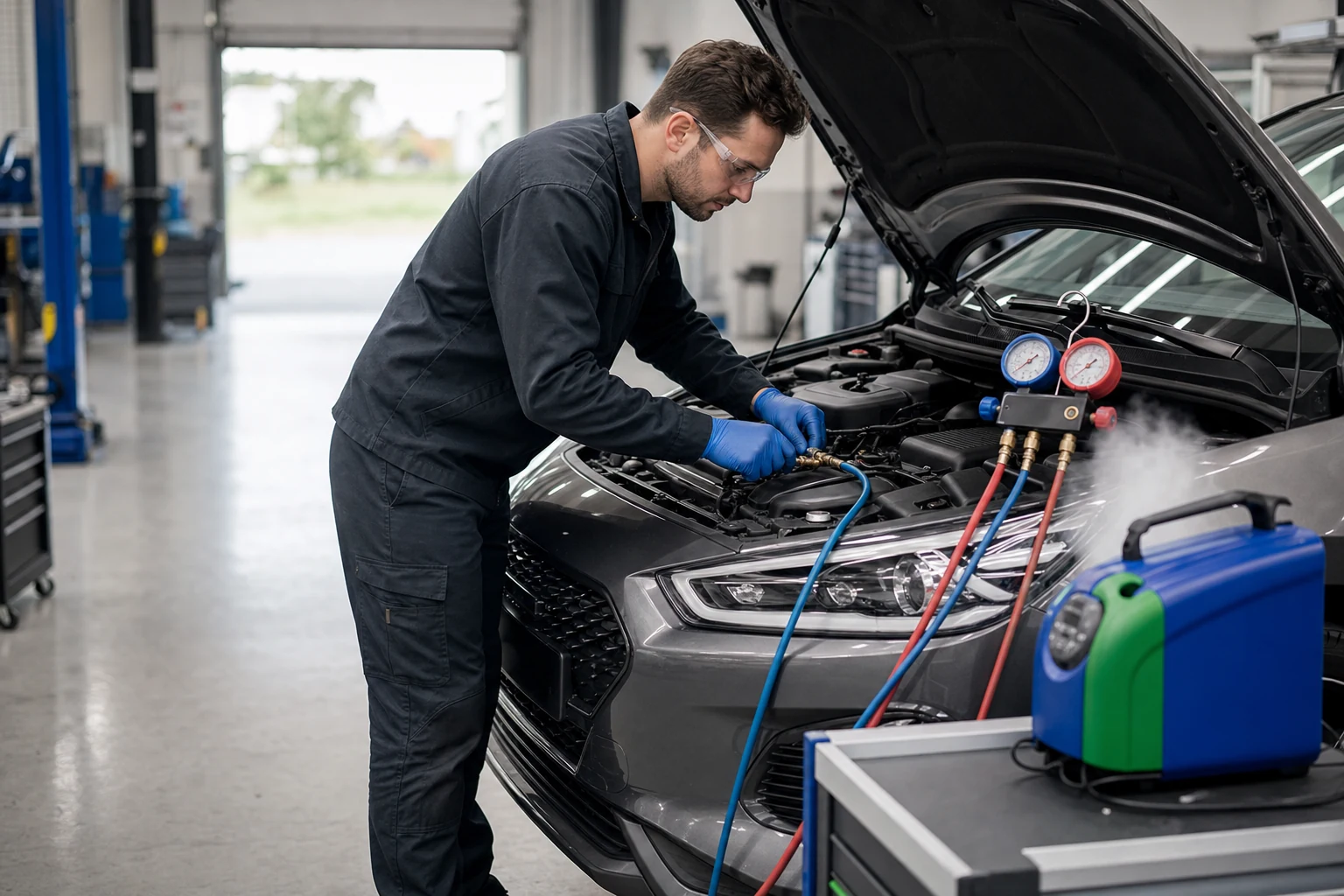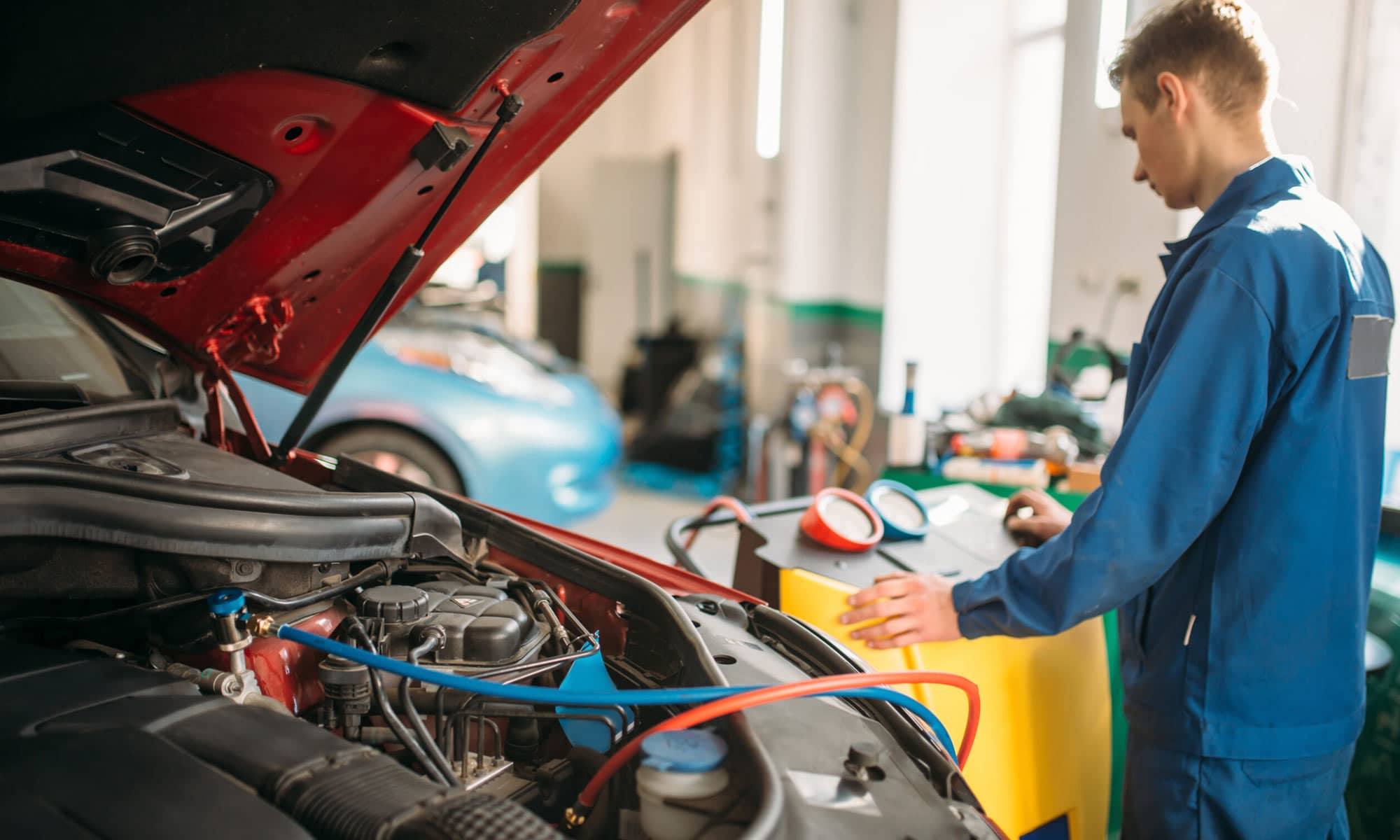


Cold air from the vents is the part most drivers notice first. If the cabin cools quickly, it is easy to assume the air conditioning system is healthy.
A proper car air con service looks deeper. It checks how the system is performing, whether the air inside the cabin is clean, and whether small faults are starting to affect the parts that keep everything working smoothly.
Cold air is only one part of the picture
Air conditioning is a sealed system with several parts working together. The compressor moves refrigerant around the system, the condenser helps release heat, the evaporator cools the air, and fans and sensors help manage the result inside the cabin. When one part begins to struggle, the vents may still feel cool for a while, but the system can be working harder than it should.
That is why a service should not be judged only by whether the air feels cold on the day. Cooling is important, but it is only one sign. A technician will also consider pressure readings, temperature output, visible condition, signs of leakage, system operation and cabin air quality.
This matters because air con problems often develop gradually. You might notice the cabin takes longer to cool, a faint smell when the fan starts, more noise than usual, or misted glass taking longer to clear. These are useful clues, but they are not always enough to tell you what is happening inside the system.
If you are comparing options after searching for car air conditioning service near me, look for a service that includes proper checks rather than just a basic recharge. BonAir explains the service in more detail on its car air conditioning system servicing page.
Pressure readings can reveal hidden issues
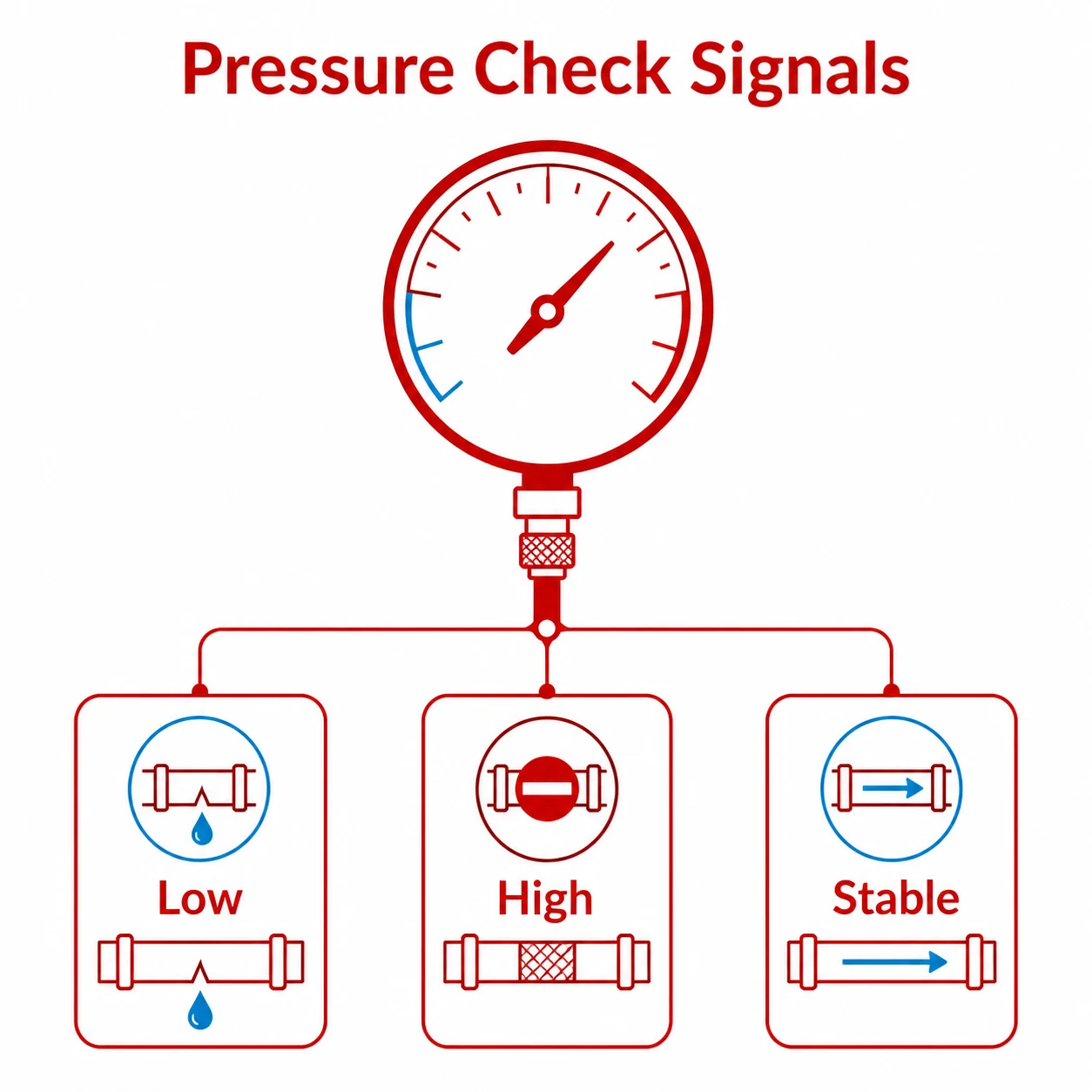
Refrigerant pressure is one of the most useful checks during air con servicing. The system needs the right amount of refrigerant, oil movement and pressure balance to operate correctly. If the pressure is too low, cooling performance can drop and the compressor may not be protected as well as it should be. If readings are unusual, they can point towards restrictions, poor heat exchange or another fault that needs attention.
A recharge without checks may make the air feel colder for a while, but it does not always explain why performance was poor in the first place. A more careful service asks better questions. Has refrigerant escaped? Is there evidence of a leak? Are the service ports and pipework in good condition? Are the operating pressures behaving as expected while the system is running?
Leak checking is especially important because refrigerant should not simply disappear quickly from a healthy system. Some natural loss over time can happen, but a noticeable drop in performance may mean there is a fault. Finding that early can help prevent repeated poor performance and avoid putting unnecessary strain on the compressor.
For drivers who want to understand the difference between servicing and recharging, BonAir has a helpful guide on when a car air con recharge may be needed. The key point is simple: topping up refrigerant is only one part of looking after the system.
Cleanliness affects comfort as much as cooling
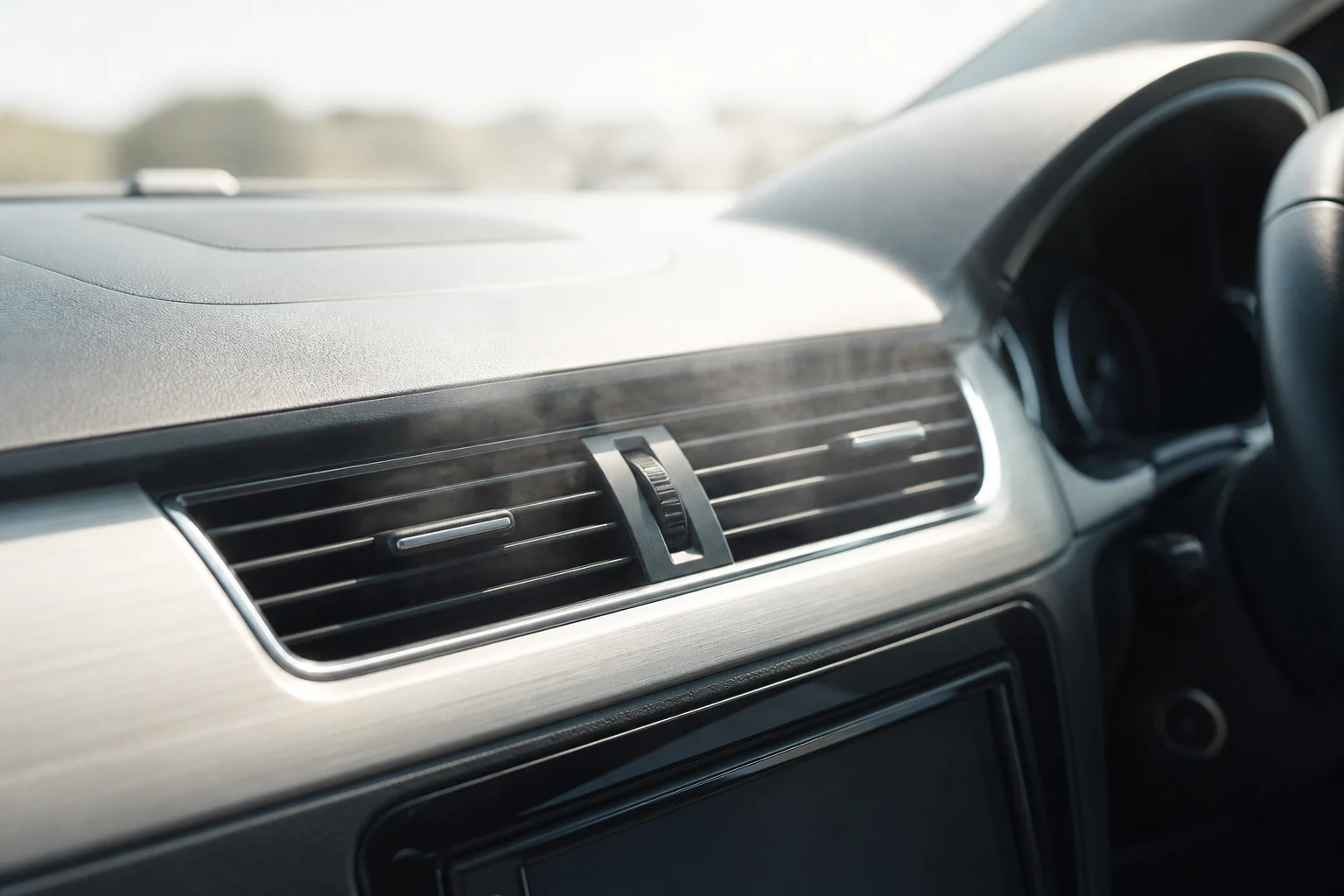
Air con servicing is also about the air you breathe inside the vehicle. Moisture can collect around parts of the ventilation and air conditioning system. Over time, that damp environment can contribute to musty smells, stale air and an unpleasant blast from the vents when the system first starts.
An antibacterial clean is designed to deal with this side of air conditioning care. It can help freshen the system by treating areas where odours and bacteria can build up. This is especially useful if the air con smells damp, the cabin feels stale, or passengers notice irritation when the fan is running.
Cleanliness is not just about comfort on hot days. Air conditioning is often used to demist windows because dry, conditioned air helps clear condensation. If the system smells unpleasant whenever it is switched on, drivers may avoid using it, which means they miss out on one of its most useful everyday benefits.
A good service should consider both cooling performance and cabin freshness. If the air is cold but smells stale, the system is not giving the driver the full benefit it should. That is why antibacterial treatment can be a sensible part of wider air con maintenance rather than an optional afterthought.
Component health protects the whole system
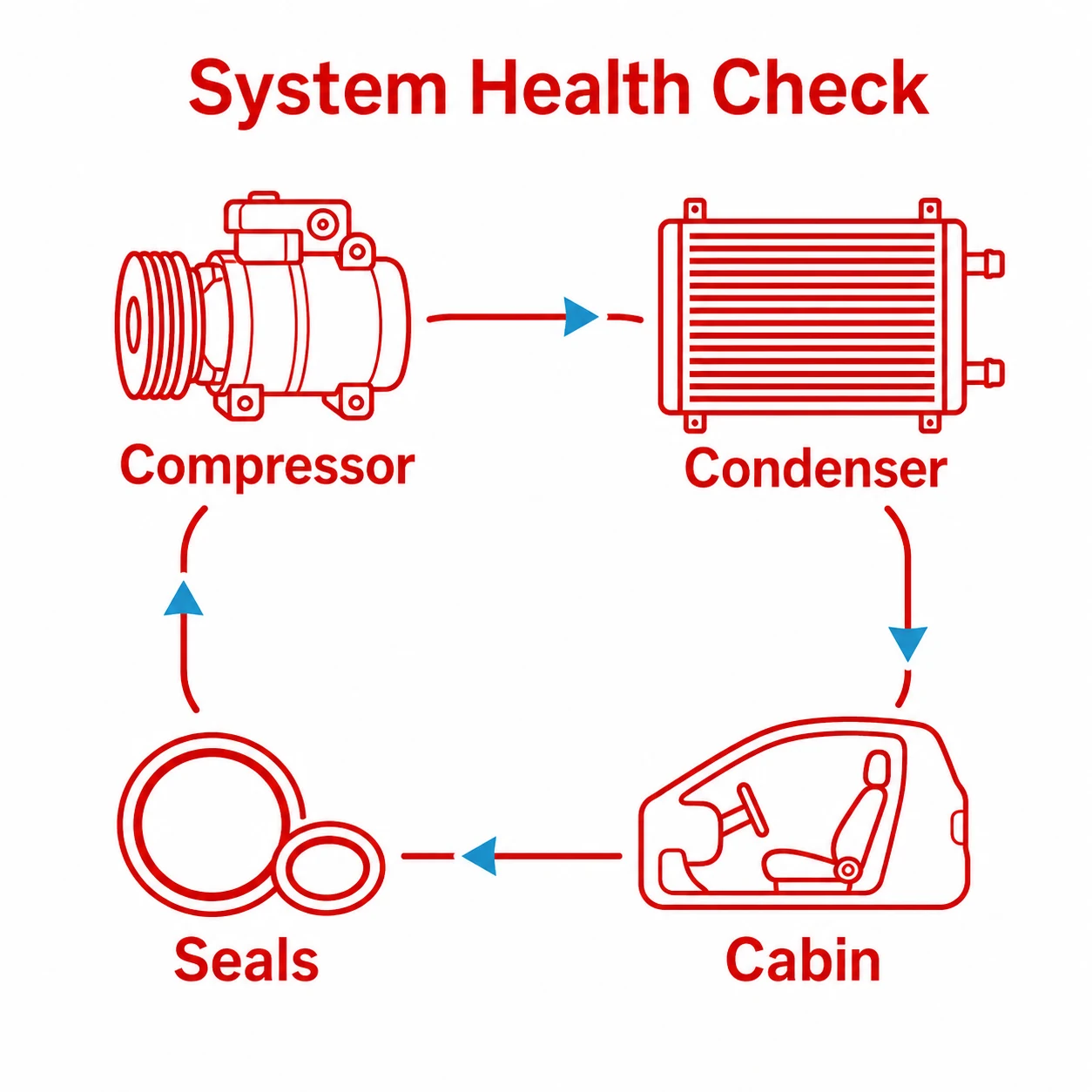
A vehicle air conditioning system relies on movement, pressure, seals, electrical control and airflow. Servicing gives a technician a chance to listen, inspect and test for signs that a part may be under strain.
The compressor is one of the most important components because it circulates refrigerant through the system. It needs correct refrigerant and oil circulation to work properly. If the system is low, blocked or operating outside the right pressure range, the compressor can be forced to work in poor conditions.
Other parts matter too. Fans help move air across heat exchangers. Seals and joints help keep refrigerant inside the system. Pipes and service connections need to remain secure. The cabin fan and controls need to respond properly. Even something that seems minor can affect how well the system cools, demists and maintains comfort.
This is where a car air con specialist near me search can lead to a better result than a quick refill alone. A specialist approach looks at the system as a whole. The aim is not to create worry, but to spot early signs before they become more noticeable during everyday driving.
For a simple explanation of how the main parts fit together, BonAir also has a guide to how vehicle air conditioning systems work.
Why a quick cold test can be misleading
Feeling cold air from the vents is useful, but it is not a complete diagnosis. A system can produce cool air while still being low on refrigerant, carrying an odour, showing pressure concerns, or masking an early fault. It can also perform differently depending on outside temperature, engine speed, fan setting and how long the vehicle has been running.
This is why proper servicing uses more than touch alone. Temperature readings, pressure gauges, visual inspection and system behaviour all help build a clearer picture. The technician is looking for evidence, not just a good first impression.
Drivers often search for ac service near me because something feels slightly off, but not completely broken. That is a good time to have the system checked. Weak cooling, odd smells, intermittent operation, unusual noises, poor demisting or a system that seems to work only on certain settings are all signs worth investigating.
It is also worth remembering that air conditioning supports comfort throughout the year. It is not only for very warm days. Used well, it can help manage humidity, keep the cabin more pleasant and support clearer visibility when windows mist up.
What a useful service should help you understand
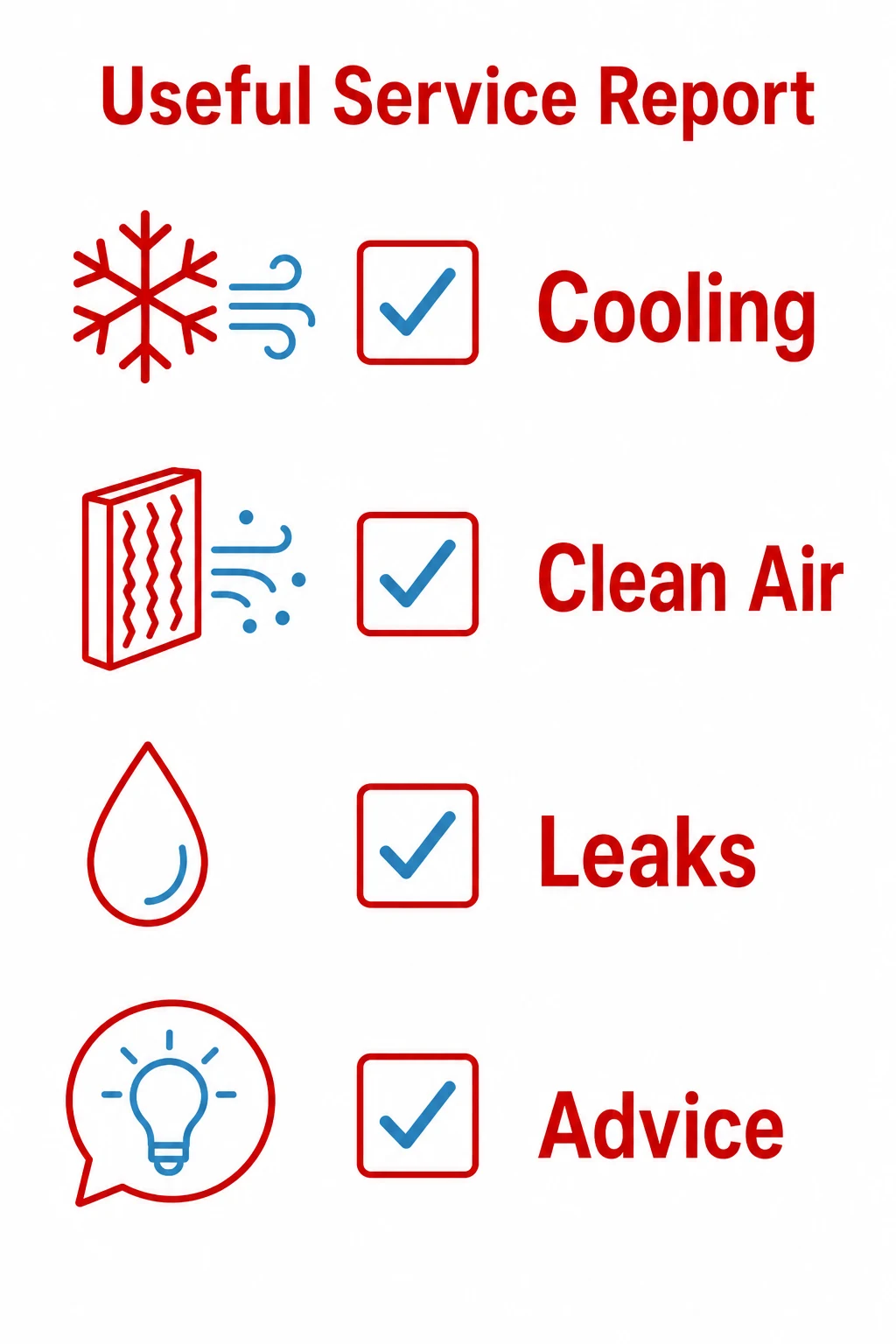
A good air con service should leave you with a clearer idea of how the system is performing. You do not need to become a technical expert, but you should know whether the system is cooling properly, whether the pressure readings are sensible, whether there are signs of leaks or wear, and whether an antibacterial clean is recommended.
The most helpful conversations are practical. For example, a technician may explain that the system is cooling well and only needed routine attention. They may point out that performance is weak and further checks are sensible. They may recommend antibacterial treatment because the vents smell stale. Or they may advise that a leak should be addressed before another recharge is relied on.
That clarity is valuable because it helps you make better decisions. Instead of guessing, you have a reasoned view of the system. You can understand whether the issue is about cooling, cleanliness, component condition, or a combination of all three.
Air con servicing is not only about making the cabin colder. Done properly, it is a check on performance, comfort, hygiene and mechanical health. That broader view is what makes it worthwhile.
- Cold air from the vents is useful, but it does not prove the whole air con system is healthy.
- A proper service checks pressure, refrigerant condition, visible components, operation and signs of leakage.
- Antibacterial cleaning can help deal with stale odours and improve cabin comfort.
- Component checks can spot early signs of strain before performance drops further.
- The best air con service gives you clear, practical information rather than a simple yes or no on cooling.
Frequently asked questions
Does car air con servicing only check whether the air is cold?
No. Cooling performance is important, but a proper service should also consider pressure readings, refrigerant level, leaks, component condition, system operation and cabin cleanliness.
Why does my car air con smell even though it still gets cold?
A cold system can still have stale odours from moisture and build up within the ventilation or air conditioning system. An antibacterial clean can help freshen the air coming through the vents.
Is a recharge the same as an air con service?
Not always. A recharge focuses on refrigerant, while a service should look more widely at performance, pressure, leakage, cleanliness and the health of key components.
When should I get my air con checked?
It is sensible to book a check if cooling feels weaker, the cabin takes longer to clear, the vents smell unpleasant, the system is noisy, or the air con behaves inconsistently.
Book a clearer air con check
If your car air con is not performing as it should, BonAir can check more than the temperature from the vents. Book a friendly system service and get a clearer view of cooling, cleanliness and component health.