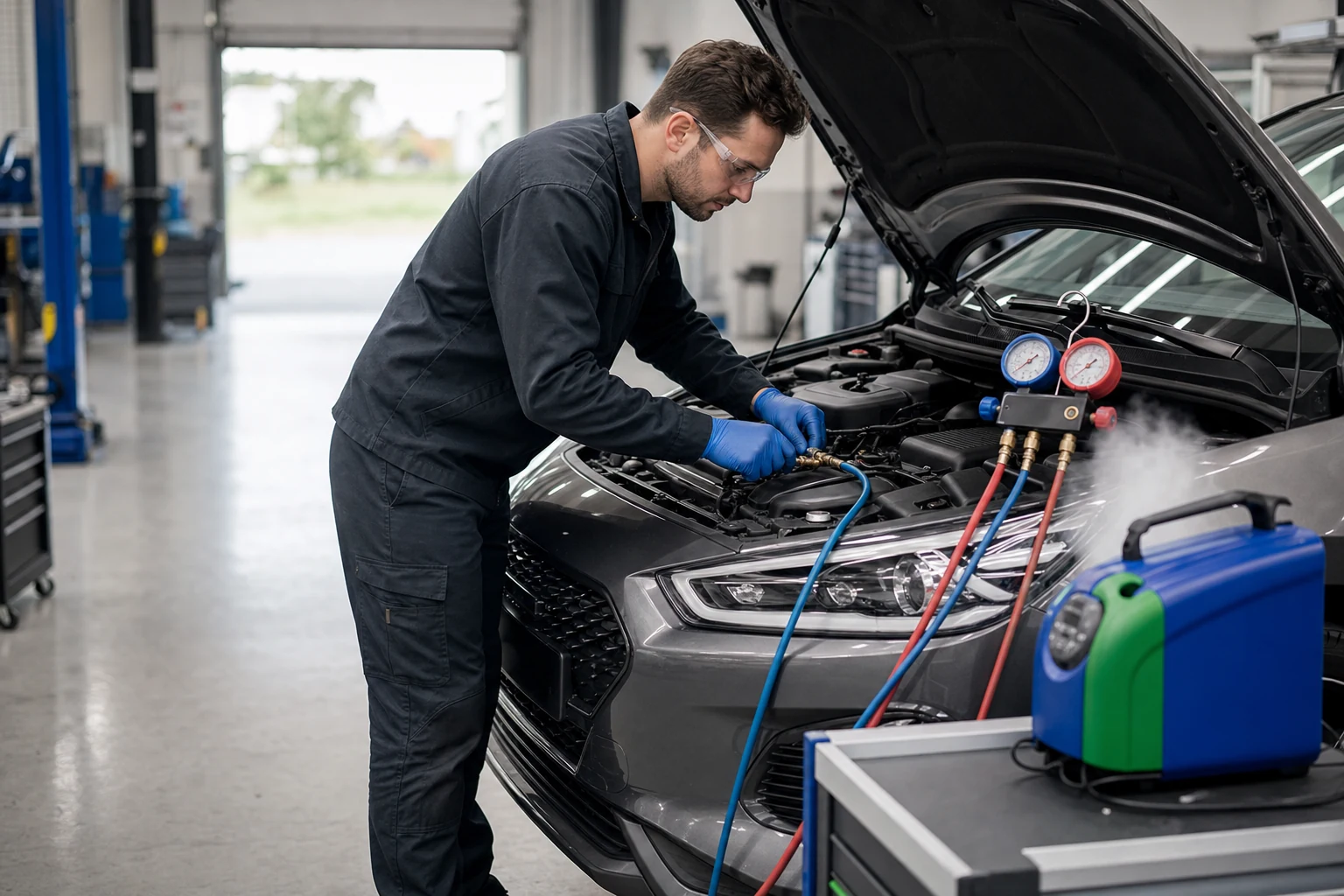


If your car is fairly modern, there is a good chance its air conditioning system does not use the older R134a gas. Many newer vehicles now need R1234yf refrigerant, and that matters when the system needs a recharge, leak check or repair.
Using the right gas is only part of the job. The equipment, checks and process all affect how well the air con cools, how safely the system runs and whether future faults are avoided.
What is R1234yf refrigerant?
R1234yf is an air conditioning refrigerant used in many newer passenger vehicles. It performs the same basic job as older air con gas by moving heat away from the cabin, but it was developed to meet modern environmental requirements and vehicle design standards.
Older cars commonly used R134a. Newer cars increasingly moved to R1234yf because vehicle manufacturers needed a refrigerant with a much lower global warming impact. That change means many drivers now own cars that cannot be correctly serviced with older gas, even if the air con symptoms feel familiar.
The important point is simple: the refrigerant must match the system it was designed for. R1234yf, R134a and R744 are not interchangeable gases. They work under different requirements, and the service equipment, connectors and procedures are different. If you want a deeper comparison of gas types, BonAir also explains the difference between R1234yf and R744 air conditioning.
Why newer cars cannot just use older air con gas
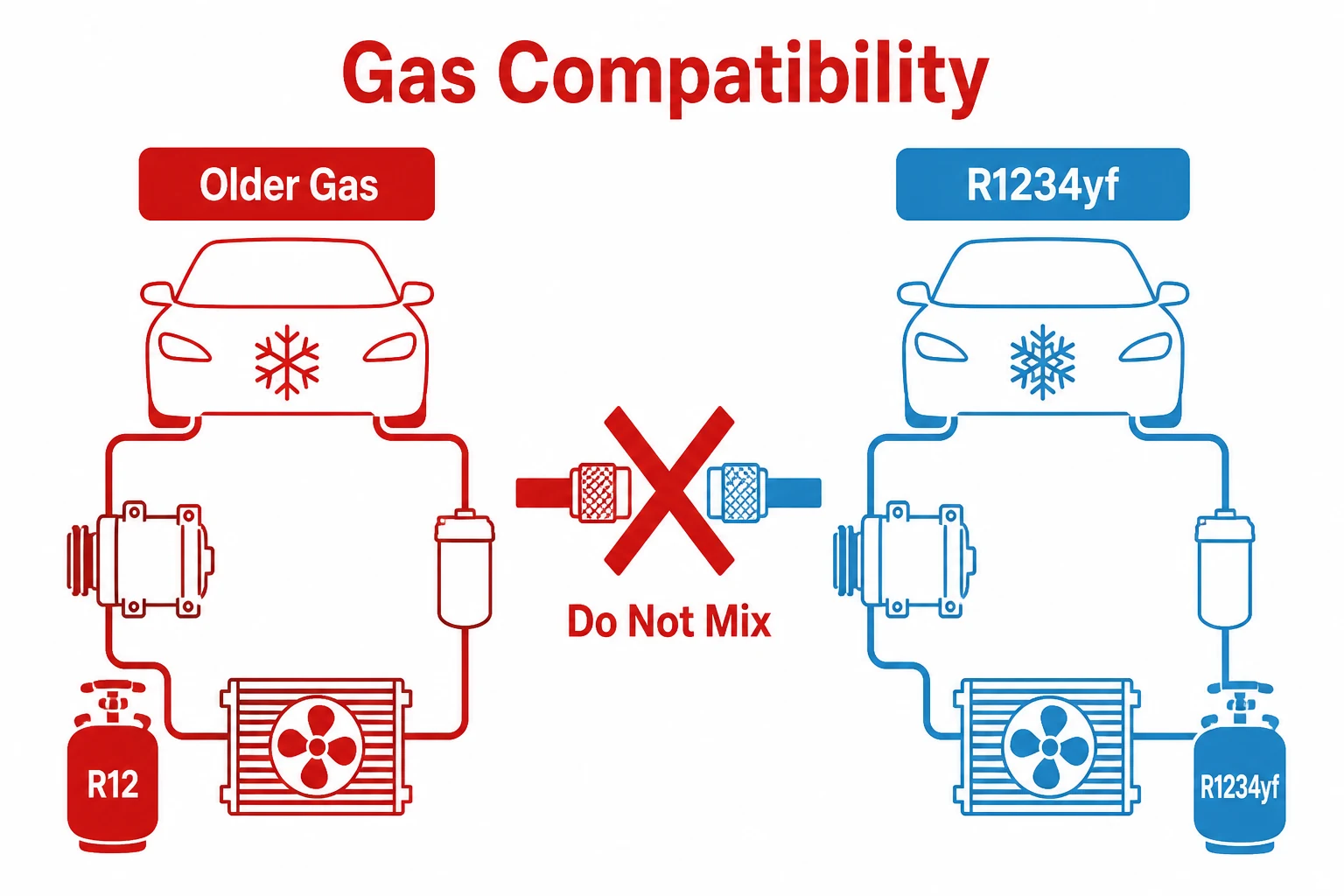
It can be tempting to think of an air con recharge as simply topping up a low system, but modern vehicle air conditioning is more precise than that. The correct refrigerant charge is measured by weight, and the system is designed around a specific gas, oil type, pressure range and component layout.
If the wrong refrigerant is introduced, several problems can follow. Cooling performance may be poor, pressure readings can become misleading, and the compressor may not receive the lubrication it expects. In more serious cases, contamination can affect recovery machines and make later repairs more complicated.
R1234yf systems usually have different service ports to reduce the risk of accidental mixing, but that does not remove the need for care. A proper service should identify the required refrigerant before work begins. The vehicle label, system specifications and diagnostic checks all help confirm what the car needs.
This is why a specialist approach matters. A technician is not just connecting a machine and pressing start. They are checking that the refrigerant type is correct, that the system can hold pressure, that the recovered gas is handled properly and that the final charge matches the vehicle specification.
Why correct R1234yf equipment matters
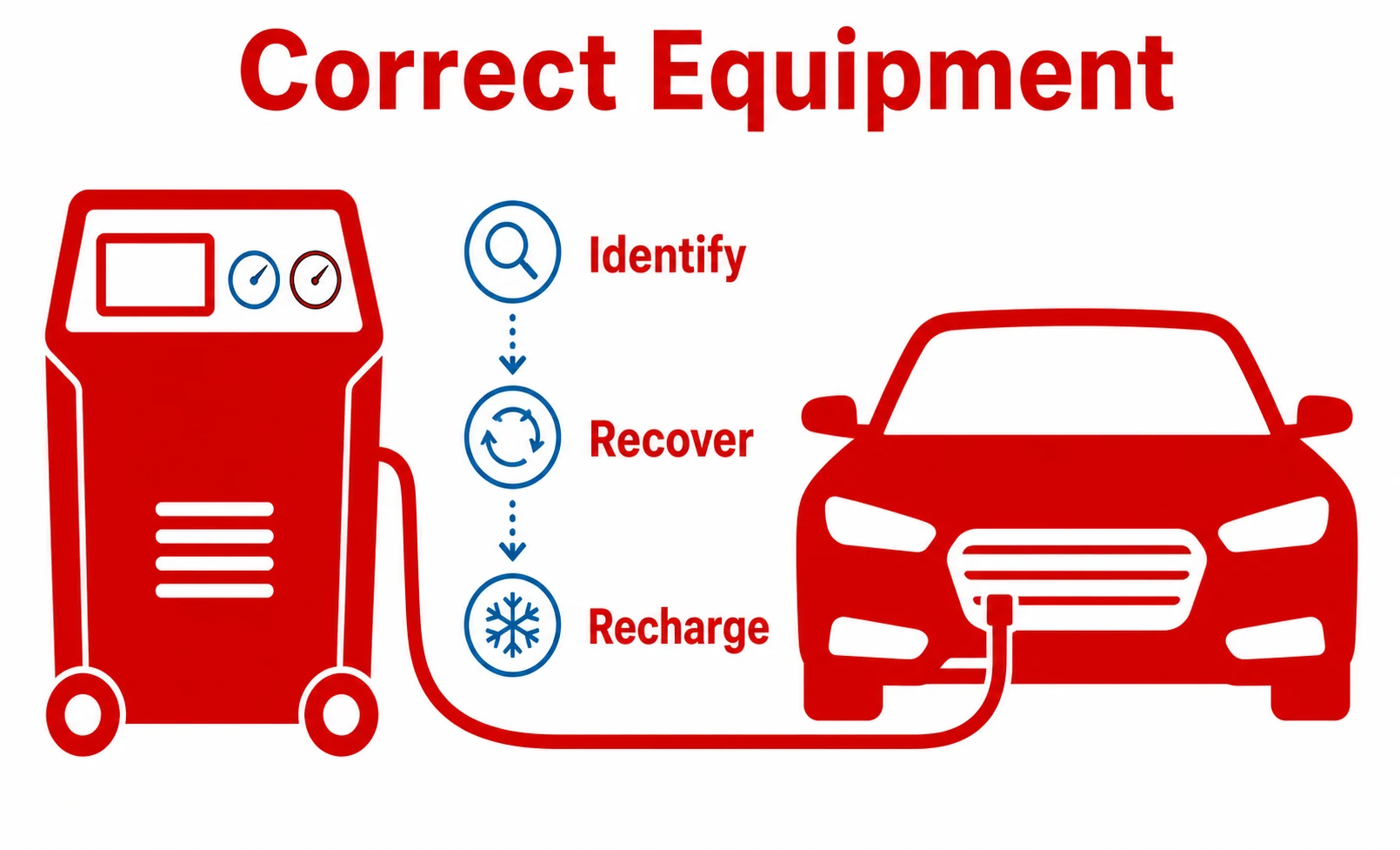
R1234yf servicing needs equipment designed for R1234yf. The machine must recover, evacuate, leak test and recharge the system using the correct gas and process. Older R134a equipment is not suitable for R1234yf work, and using unsuitable equipment risks contamination.
A professional R1234yf recharge usually includes recovering any remaining refrigerant, measuring what came out, creating a vacuum to remove air and moisture, checking whether the system holds vacuum, adding the correct oil or dye where appropriate, and recharging the exact quantity of refrigerant required by the vehicle.
That accuracy matters because both undercharging and overcharging can cause problems. Too little refrigerant can lead to weak cooling and unnecessary compressor strain. Too much refrigerant can raise system pressures and reduce efficiency. Air con systems are designed to work within a narrow operating range, so guessing the charge is not good practice.
The right equipment also helps protect the refrigerant supply. R1234yf is more sensitive to contamination control because it should not be mixed with other refrigerants. If a system has been filled incorrectly elsewhere, it may need additional checks before normal servicing can continue.
For drivers who know their vehicle uses this gas, BonAir provides dedicated R1234yf recharging and repair support for modern air conditioning systems.
Common signs your R1234yf air con needs attention
The most obvious sign is air from the vents that no longer feels cold, but it is not the only clue. Modern systems can lose performance gradually, so a driver may not notice the change until warm weather or demisting becomes more demanding.
Other symptoms can include the air con taking longer to cool the cabin, the compressor cycling more than usual, misted windows clearing slowly, or an unusual noise when the air conditioning is switched on. A damp or musty smell can also suggest the system needs cleaning, especially around the evaporator and cabin airflow areas.
A low refrigerant charge often points to a leak, even if it is a small one. Air con is a sealed system, so gas should not simply disappear as part of normal use. Some loss can happen over time through seals and hoses, but a noticeable drop in cooling should still be checked properly.
If you are unsure whether the issue is gas, a leak, an electrical fault or a compressor problem, BonAir has a useful guide to signs that you need car air conditioning repairs. A proper inspection is always better than repeatedly recharging a system that has an unresolved fault.
How specialist recharging helps avoid poor cooling
A good R1234yf recharge starts with diagnosis, not assumption. The technician should confirm the refrigerant type, look for obvious damage, recover any remaining gas and check whether the system appears sealed before adding new refrigerant.
Vacuum testing is an important part of the process, but it is not the same as finding every possible leak. Some leaks only show under pressure, temperature change or normal operating conditions. That is why dye, electronic leak detection, pressure testing and component inspection may be needed when a fault is suspected.
Once the system is ready, the exact refrigerant quantity is added. This is where proper equipment makes a clear difference. R1234yf systems can be sensitive to charge level, so a careful, measured recharge gives the car the best chance of cooling properly without unnecessary stress on the compressor and other components.
After recharging, checks should confirm that the air from the vents is cooling as expected and that the system pressures look sensible while running. If cooling is still weak, the cause may be elsewhere, such as a blocked condenser, faulty pressure sensor, damaged compressor, cooling fan issue or internal restriction.
Regular servicing can also help keep performance steady. BonAir covers this in more detail in its guide on how often you should service your car air conditioning.
What about R744 refrigerant?
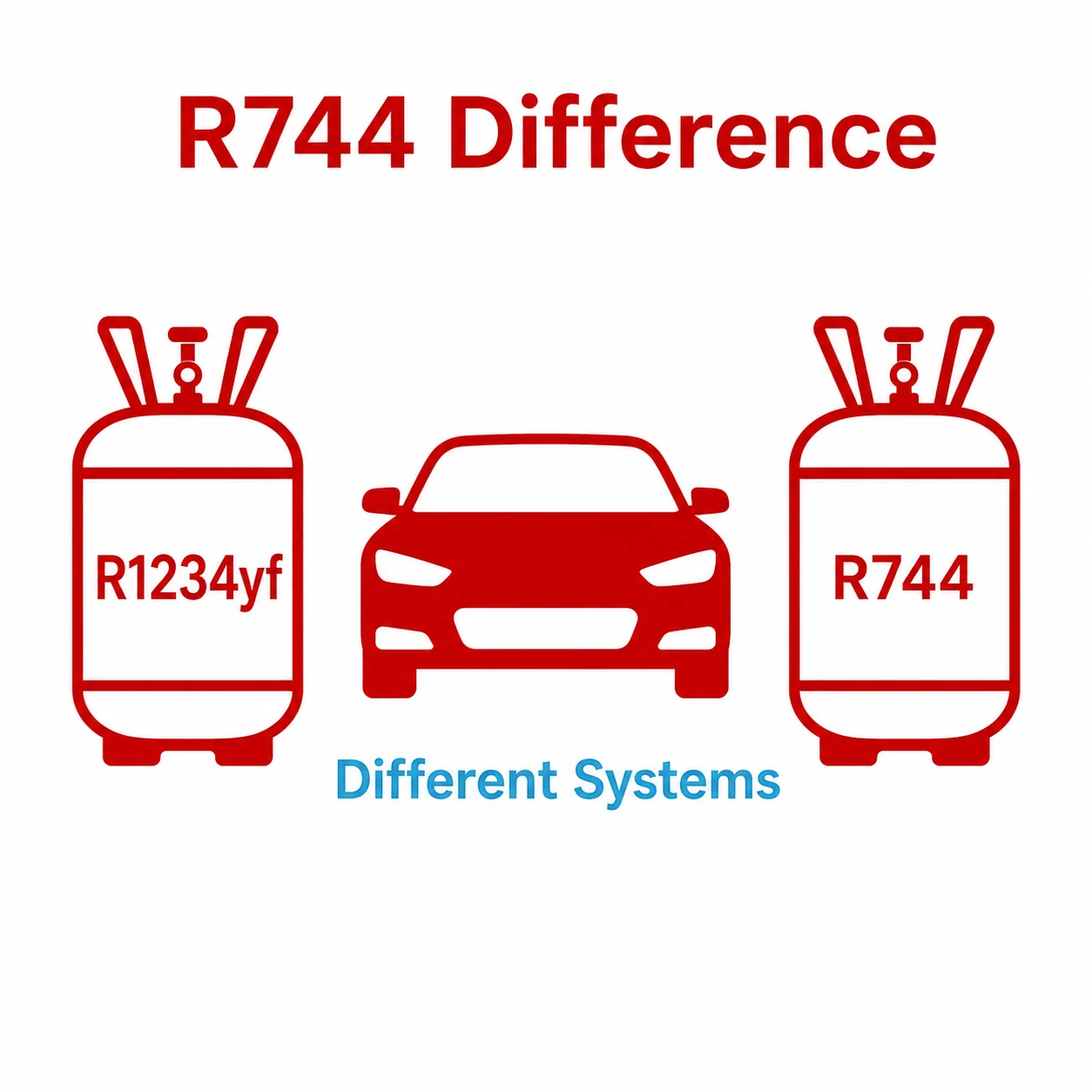
R744 is another modern refrigerant used in some vehicle air conditioning systems. It is carbon dioxide based and works at much higher pressures than R1234yf. That means R744 systems need completely different equipment and procedures.
Searches around R744 air con gas often come from drivers trying to understand which refrigerant their car uses. That is sensible, because gas type affects how the system should be serviced. The safest approach is to identify the vehicle specification before any recharge or repair is attempted.
Most drivers do not need to become refrigerant experts. What matters is choosing a service that recognises the difference between R134a, R1234yf and R744, and treats each system correctly. Matching the right gas, equipment and checks is what protects cooling performance and avoids unnecessary complications.
- Many newer cars use R1234yf refrigerant instead of older R134a gas.
- R1234yf, R134a and R744 are not interchangeable, so the correct refrigerant must be confirmed before servicing.
- Specialist equipment helps prevent contamination and allows the system to be recharged by the correct measured weight.
- Weak cooling can mean low gas, but it can also point to leaks, compressor issues, sensor faults or airflow problems.
- A proper R1234yf service should include checks before and after recharging, not just a quick refill.
Frequently asked questions
How do I know if my car uses R1234yf?
The refrigerant type is usually shown on a label in the engine bay or near the air conditioning service area. A technician can also confirm it from the vehicle specification before starting any recharge or repair.
Can R1234yf be mixed with R134a?
No. Refrigerants should not be mixed. The system must use the gas it was designed for, and contaminated refrigerant can cause poor performance and create problems for recovery equipment.
Will a recharge fix warm air from the vents?
It can if the only issue is a low refrigerant charge, but warm air may also be caused by a leak, compressor fault, condenser issue, pressure sensor fault or electrical problem. Proper checks help find the real cause.
Is R744 the same as R1234yf?
No. R744 and R1234yf are different refrigerants used in different types of vehicle air conditioning systems. R744 systems operate very differently and need specialist equipment of their own.
Need help with R1234yf air con?
If your car needs R1234yf recharging, leak checking or repair, BonAir can help you get the system cooling properly with the right gas, equipment and care.